Legal disputes can feel confusing. Most people think of going to court first. However, litigation is not the only option. Methods like mediation offer faster and simpler solutions. This raises an important question: should you choose mediation or go to court? In this guide, you will understand your legal options in India and decide what suits your situation best.
What Is Mediation?
Mediation is a form of Alternative Dispute Resolution (ADR). A neutral third party, called a mediator, helps both sides reach an agreement. The mediator does not impose a decision. Instead, they guide communication and negotiation. The goal is to settle the dispute peacefully. Mediation is common in family disputes, business issues, and civil matters.
What Is Court Litigation?
Court litigation is the traditional way to resolve disputes. In this process, both parties present their case before a judge. The judge then gives a legally binding decision. Litigation follows strict procedures and rules. It often involves multiple hearings and legal arguments. This method is widely used under civil law in India.
Key Differences Between Mediation and Court
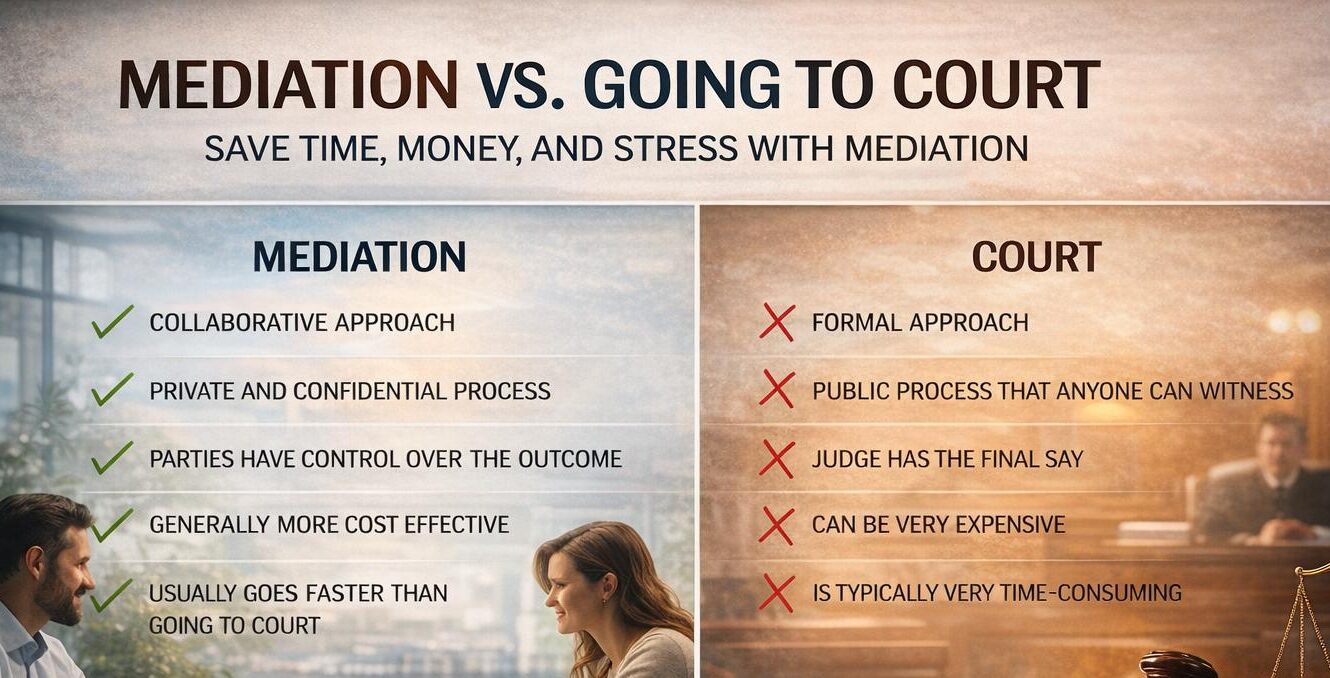
Understanding the differences helps you choose the right option:
- Mediation is flexible, while courts follow strict procedures
- Mediation focuses on agreement, while courts give final decisions
- Mediation is faster, while court cases take longer
- Mediation stays private, while court cases are usually public
These points clearly explain mediation vs litigation in India.
Which Option Is Faster?
Mediation usually resolves disputes quickly. In many cases, parties settle issues in a few sessions. On the other hand, court cases often take months or years. Delays happen due to procedures and backlog. Therefore, mediation works better if you want a quick solution.
What About Costs?
Mediation costs less than litigation. It requires fewer formal steps and less time. As a result, expenses remain low. Court cases involve lawyer fees, court fees, and documentation costs. These expenses increase over time. So, mediation is a smart option under dispute resolution methods in India.
Is the Outcome Legally Binding?
Mediation depends on mutual agreement. Once both parties sign the settlement, it becomes binding. Courts, however, give binding decisions directly. If someone does not follow the order, the law enforces it. This difference matters when you compare reliability.
When Should You Choose Mediation?
You should choose mediation when both parties want to settle the issue. It works best when communication is possible. It also helps when you want to maintain relationships. For example, family and business disputes benefit from mediation. It promotes cooperation instead of conflict.
When Should You Go to Court?
Court becomes necessary in serious cases. You should choose litigation if the matter involves legal rights or complex issues. It is also required when one party refuses to cooperate. Criminal cases must go to court. Courts ensure strict enforcement of the law.
Quick Checklist to Decide
Use this checklist to choose the right option:
- Want a quick solution? → Mediation
- Need legal enforcement? → Court
- Want to save money? → Mediation
- Facing a serious dispute? → Court
This helps you evaluate your situation clearly.
Common Misconceptions
Many people think mediation is weak. However, it often creates long-term solutions. Others believe courts give quick results. In reality, delays are common. Understanding these facts helps you make better decisions.
How LexfiedGo Can Help You
Choosing the right method can feel difficult. LexfiedGo helps you understand your case and legal options. It guides you in choosing between mediation and litigation. With expert support, you can save time and reduce stress.
Conclusion
Both mediation and court have advantages. Mediation offers speed and flexibility. Courts provide strong legal enforcement. Your choice depends on your situation and priorities. By understanding mediation vs litigation in India, you can take the right step. Always aim to resolve disputes effectively, not just win them.