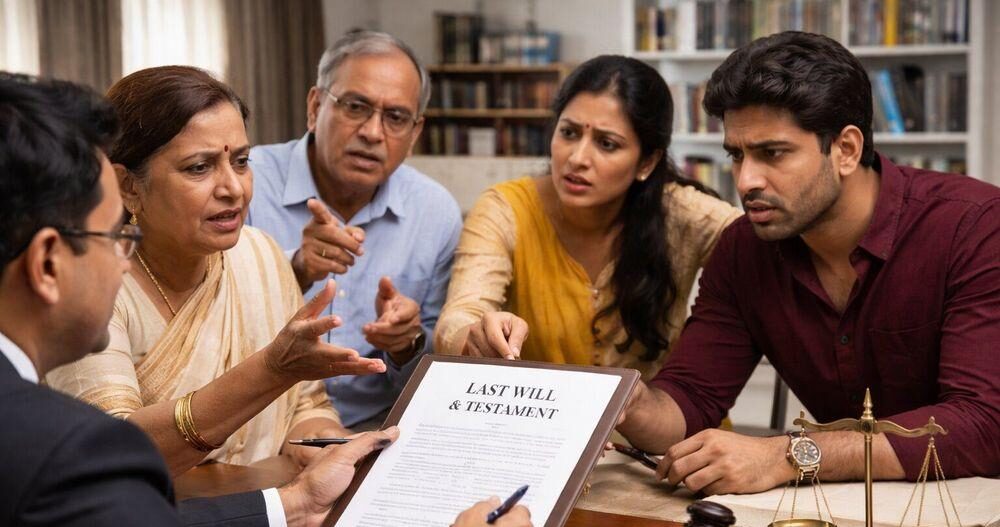
When a person passes away without leaving a will, confusion often arises among family members. In legal terms, we call this situation dying intestate. Indian law clearly explains how property is distributed in such cases. Therefore, understanding property distribution without will India helps families avoid disputes and handle matters smoothly.
What Does Dying Without a Will Mean?
If a person dies without a will, the law—not the individual—decides how to distribute their assets. In other words, the person loses control over who receives their property.
Instead, the legal system identifies rightful heirs and divides the assets among them. This process is known as intestate succession. As a result, families must follow strict legal rules.
Laws Governing Intestate Succession
Different religions follow different inheritance laws in India. For example, Hindus, Sikhs, Jains, and Buddhists follow the Hindu Succession Act, 1956. On the other hand, Muslims and Christians follow their respective personal laws.
Therefore, understanding intestate succession laws India becomes important because it determines how property is legally divided.
Who Are Legal Heirs?
Legal heirs include individuals who have a rightful claim to the deceased’s property. Typically, these include the spouse, children, and parents.
Moreover, the law prioritizes certain heirs over others. Knowing legal heirs property rights India helps families clearly understand who can claim the assets.
Property Distribution Under Hindu Law
Under Hindu law, Class I heirs receive the first priority. These include the spouse, sons, daughters, and mother of the deceased.
If no Class I heirs exist, the law moves to Class II heirs such as siblings. Consequently, the law ensures a structured and fair distribution of property.
Role of Gender Equality
Modern laws promote equality between sons and daughters. Today, daughters enjoy the same rights as sons in ancestral property.
As a result, inheritance laws have become more balanced and fair, ensuring equal treatment for all children.
What Happens to Joint Property?
When a person owns property jointly, their share does not automatically transfer to the co-owner. Instead, the law distributes that share among legal heirs.
Meanwhile, the remaining share continues to belong to the surviving owner. Therefore, proper documentation plays an important role in such cases.
Importance of Succession Certificate
In many cases, legal heirs need a succession certificate to claim financial assets like bank balances or investments.
For example, banks often require legal proof before releasing funds. Hence, understanding succession certificate process India helps heirs complete legal formalities without delay.
Why Legal Awareness is Important
Many families face confusion due to lack of legal knowledge. Consequently, disputes and delays often occur.
Therefore, people often refer to a family law inheritance guide India to better understand their rights and the process involved.
Why Understanding This Process Matters
- Prevents disputes among family members
- Ensures fair and legal distribution of assets
- Helps heirs claim property smoothly
- Reduces legal complications and delays
Common Misconceptions About Property Without a Will
Many people believe that the eldest son automatically inherits everything. However, the law divides property equally among eligible heirs.
Similarly, some think daughters have fewer rights. In reality, modern laws ensure equal rights for both sons and daughters.
Additionally, some assume verbal wishes are enough. However, only legal provisions apply when no written will exists.
Challenges Faced by Families
Families often face emotional stress and legal complications in such situations. Moreover, missing documents can delay the process further.
However, with proper awareness and guidance, families can manage these challenges effectively and avoid unnecessary disputes.
Conclusion
When a person dies without a will, the law ensures fair distribution of property among legal heirs. However, this process may not reflect the personal wishes of the deceased.
Therefore, creating a will remains the best way to avoid confusion and ensure proper distribution. With the right knowledge, families can handle such situations confidently and smoothly. Follow https://www.lexfiedgo.in/ for such legal Guide