Adoption is a meaningful way to build a family and provide a child with love, care, and stability. In India, adoption is governed by legal rules to ensure the safety and welfare of the child. Understanding adoption process in India helps prospective parents follow the correct legal steps and avoid confusion.
What is Adoption?
Adoption is a legal process through which a child becomes the lawful child of adoptive parents. After adoption, the child enjoys the same rights as a biological child, including inheritance and family status.
This process creates a permanent parent-child relationship recognized by law.
Laws Governing Adoption in India
Different laws regulate adoption in India. Hindus, Sikhs, Jains, and Buddhists follow the Hindu Adoption and Maintenance Act, 1956. Other communities usually adopt under the Juvenile Justice Act.
Understanding adoption laws in India is important because it determines which legal route applies to a particular family.
Who Can Adopt a Child?
Indian law allows both single individuals and married couples to adopt, subject to certain conditions. The adoptive parents must be financially stable, mentally sound, and capable of providing a safe environment.
Age criteria and consent requirements may also apply depending on the situation.
Who Can Be Adopted?
Only legally free children can be adopted. These include orphaned, abandoned, or surrendered children who are declared eligible for adoption by authorities.
The law ensures that proper verification is done before placing a child with adoptive parents.
Step-by-Step Adoption Process
The adoption process in India follows a structured legal procedure.
First, prospective parents must register with an authorized adoption agency. Next, they complete a home study process where authorities assess their suitability.
After approval, parents are matched with a child based on preferences and availability. Once both parties accept the match, the child is placed with the family.
Finally, the court issues an adoption order, making the relationship legally valid. Understanding legal adoption procedure India helps parents prepare for each step.
Role of CARA
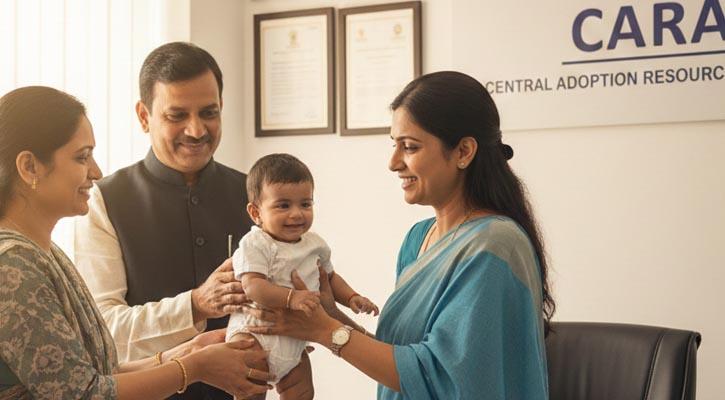
The Central Adoption Resource Authority (CARA) regulates adoption in India. It ensures transparency and proper implementation of adoption laws.
CARA also maintains records and monitors the adoption process to protect the interests of children.
Documents Required for Adoption
Adoptive parents must submit documents such as identity proof, income proof, medical reports, and photographs.
Proper documentation helps speed up the process and ensures legal compliance.
Rights of Adopted Child
An adopted child has the same legal rights as a biological child. This includes the right to inheritance, education, and family support.
Understanding rights of adopted child in India ensures that parents treat adoption as a full and permanent responsibility.
Why Legal Awareness is Important
Adoption involves legal formalities that must be followed carefully. Lack of awareness can lead to delays or rejection.
Many people rely on a family law adoption guide India to understand the process and avoid common mistakes.
Why Understanding Adoption Laws Matters
- Ensures a safe and legal adoption process
- Protects the rights of the child
- Helps parents follow correct procedures
- Prevents legal complications in the future
Common Misconceptions About Adoption
One common misconception is that adoption is a quick process. In reality, it involves careful verification and legal steps.
Another myth is that adopted children have fewer rights. However, the law grants them equal rights as biological children.
Some people also believe that only married couples can adopt, but single individuals are also eligible under certain conditions.
Challenges in the Adoption Process
Adoption can be time-consuming due to legal checks and waiting periods. Emotional expectations and delays may also create challenges for parents.
However, proper understanding and patience can make the process smoother and more fulfilling.
Conclusion
Adoption in India is a well-regulated legal process designed to protect the best interests of the child. While the procedure may take time, it ensures safety, transparency, and fairness.
By understanding the legal steps and requirements, prospective parents can confidently move forward. Adoption not only changes the life of a child but also brings joy and fulfillment to families. Follow https://www.lexfiedgo.in/ for such a legal guide.