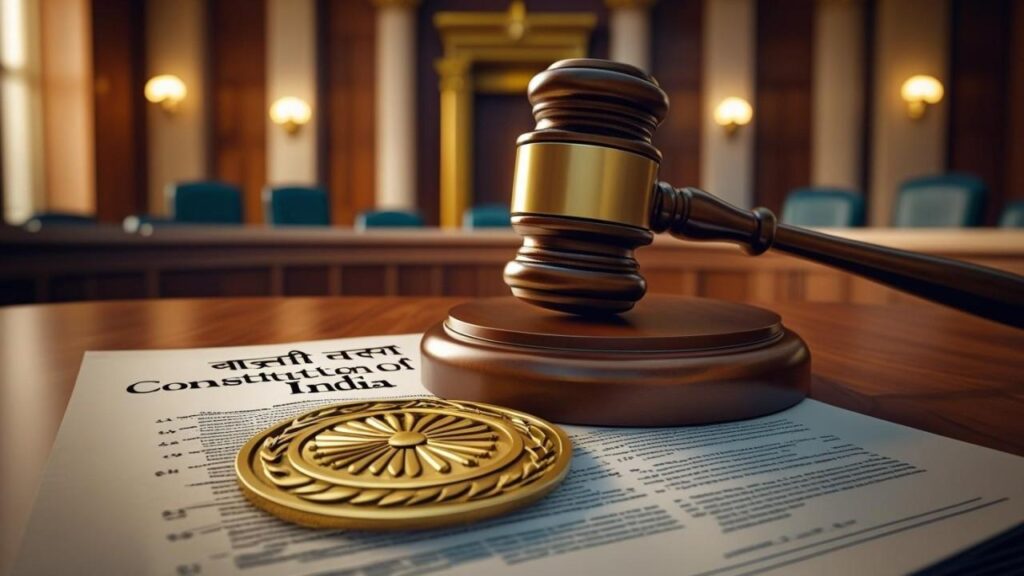

Going to court is a big decision in India. It’s not like what you see in Bollywood movies where everything gets solved dramatically in one hearing. Real court cases can take years, cost lakhs of rupees, and drain your energy. So how do you know if your problem needs a judge or if there’s a better way to handle it?
Let me break this down in a way that makes sense.
What Does “Going to Court” Actually Mean?
When you go to court in India, you’re asking a judge to settle a disagreement between you and someone else. This could be about money they owe you, a property dispute, a contract they broke, an injury they caused, or your rights being violated.
India has different types of courts:
- Supreme Court (highest court in Delhi)
- High Courts (one in each state)
- District Courts (in each district)
- Magistrate Courts (for criminal cases and small civil matters)
- Special Courts (like Family Courts, Consumer Courts, Labour Courts)
Think of the court as the ultimate referee. But just like you wouldn’t call a referee for every small argument, you shouldn’t run to court for every problem.
When You SHOULD Consider Going to Court
1. When someone violated your legal rights and won’t fix it
If someone genuinely violated the law or your fundamental rights and refuses to make things right, court might be your only option.
Example: In the landmark case of Vishaka v. State of Rajasthan (1997), social workers went to the Supreme Court after a brutal incident of sexual harassment. There were no laws protecting women from workplace harassment at that time. The Court created guidelines that later became the law. Sometimes, going to court changes society itself.
Another powerful example is Kesavananda Bharati v. State of Kerala (1973), where a monk challenged the government’s power to take over religious properties. This case established that the basic structure of our Constitution cannot be changed, protecting our democracy forever.
2. When you’ve tried everything else
Indian courts appreciate when you’ve made genuine efforts to solve the problem first. Did you talk to the person? Send legal notices? Try mediation or compromise?
Example: In many property disputes, courts look favorably on parties who attempted family settlements or panchayat resolutions before filing suits. The Code of Civil Procedure actually encourages courts to refer cases to mediation.
3. When the amount at stake is significant
If someone owes you ₹500, the cost and time of going to court isn’t worth it. But if someone owes you ₹50,000 or caused serious damage to your property or health, court might make sense.
For smaller amounts, consider Consumer Courts (for amounts up to ₹1 crore) or Lok Adalats (People’s Courts), which are much faster and cheaper.
4. When you need the court’s special powers
Only courts can do certain things:
- Issue restraining orders
- Legally end a marriage (divorce)
- Decide child custody
- Declare someone guilty of a crime
- Partition property among family members
- Issue writs protecting fundamental rights (through High Courts and Supreme Court)
Example: In Maneka Gandhi v. Union of India (1978), the Supreme Court used its special writ powers under Article 21 to expand the meaning of “right to life” to include the right to live with dignity. Only courts have this power to interpret the Constitution.
5. When time is running out
Every type of legal claim has a deadline under the Limitation Act, 1963:
- Money recovery: 3 years
- Property disputes: 12 years
- Accident compensation: 2 years from the accident
- Cheque bouncing: 30 days after receiving bank notice
If you wait too long, you lose your right to go to court forever.
Example: In Syed Abdul Khader v. Rami Reddy (1979), the Supreme Court made it clear that if you file even one day after the limitation period, your case will be dismissed. Time is crucial.
When You Should NOT Go to Court
1. When it costs more than you’d win
Court isn’t free in India. You might pay for:
- Court fees (based on the claim amount)
- Lawyer fees (₹5,000 to ₹50,000+ per hearing depending on the lawyer and court)
- Stamp paper costs
- Travel expenses for multiple hearings
- Time off work (cases can have 20-30 or more hearings)
- Stress affecting your health
If you’re fighting over ₹20,000 but it’ll cost you ₹50,000 in lawyer fees and take 3 years, you’re losing money even if you win.
Reality check: The average civil case in District Courts takes 3-5 years. Some property cases have been going on for 20-30 years across generations!
2. When you can’t prove your case
In court, feelings and beliefs aren’t enough. You need evidence: documents, receipts, photos, videos, witnesses, written agreements.
Indian courts follow the Indian Evidence Act, 1872. If you can’t prove your case according to this law, you’ll lose.
Example: In Sharad Birdhichand Sarda v. State of Maharashtra (1984), the Supreme Court emphasized that suspicion, however strong, cannot replace proof. You need solid evidence.
Many cases fail because people think their word is enough. It’s not. You need documentary proof.
3. When the other person has nothing to give you
Let’s say someone damaged your scooter and you win a ₹30,000 judgment in court. Great! Except… they don’t have any money or property. The court can order them to pay you, but if they’re broke, you still won’t get paid.
Even if you get a decree, executing it (actually getting your money) is another battle that can take years.
4. When you just want revenge or to prove a point
Some people go to court because they’re angry and want to punish someone. But court is about legal remedies, not revenge.
Going to court for revenge usually backfires. You spend years reliving something negative, missing work for hearings, spending lakhs, and staying angry.
Example: In State of Karnataka v. Selvi (2010), the Supreme Court said that justice is about fairness and rights, not punishment for its own sake. Courts focus on resolving disputes, not satisfying emotions.
5. When there’s a better alternative
Many disputes can be solved through faster, cheaper methods:
- Lok Adalat: Free, settlement-based courts for small disputes. Decisions are final and binding.
- Mediation: Available at most courts, where a trained mediator helps you settle.
- Arbitration: Private resolution based on the Arbitration and Conciliation Act, 1996.
- Consumer Courts: For consumer disputes up to ₹1 crore, much faster than regular courts.
- Panchayat or Community Settlement: Especially in villages, respected elders can help resolve disputes.
- Family Settlement: For property and family disputes, a written agreement registered with authorities.
Example: Afcons Infrastructure Ltd. v. Cherian Varkey Construction Co. (2010) encouraged parties to use arbitration for commercial disputes rather than clogging courts. Many construction and business disputes now go to arbitration first.
Real-Life Indian Scenarios
Scenario 1: Your neighbor built a wall blocking your door
- Don’t rush to court: Talk to your neighbor first. Involve local community leaders or RWA (Resident Welfare Association). Try mediation.
- Go to court only if: They refuse to cooperate and it’s genuinely blocking your legal right to access. File in Civil Court, but be prepared for a long battle. Property disputes in India are notorious for taking decades.
Scenario 2: Someone spread false rumors about you on WhatsApp
- Don’t go to court: If it’s just rude opinions or gossip among friends.
- Go to court if: They posted false facts that damaged your reputation (defamation under IPC Section 499-500) and you can prove financial or professional harm. You can file a criminal complaint or a civil defamation suit.
Example: In Subramanian Swamy v. Union of India (2016), the Supreme Court upheld criminal defamation laws but made it clear that criticism and fair comment are protected. Not every insult is defamation.
Scenario 3: A shopkeeper sold you a defective phone
- Don’t go to regular court: File a complaint in Consumer Court instead. It’s designed for exactly this situation.
- Process: File online or in person at the District Consumer Forum (for claims under ₹50 lakhs). Much faster than civil courts and no lawyer needed.
Example: Consumer Courts handle lakhs of cases about defective products, poor services, unfair practices. They’re more accessible and faster.
Scenario 4: Someone hit you with their car
- Consider court if: Your injuries are serious, medical bills are high, and the insurance company won’t offer fair compensation under the Motor Vehicles Act, 1988.
- Alternative: File a claim with the Motor Accident Claims Tribunal (MACT). It’s faster than regular courts and designed for accident cases.
Questions to Ask Yourself Before Going to Court
- What exactly do I want? (Money? Stop something? Property division?)
- Can the court actually give me that?
- Do I have written proof and evidence?
- How much will this cost in money, time, and mental peace?
- What are my realistic chances of winning?
- Have I tried solving this through compromise or mediation?
- Can I wait 3-5 years (or more) for justice?
- Will I actually be able to collect the money if I win?
FAQs
Can I represent myself in court?
Yes, you have the right to represent yourself (called “party-in-person”). The Supreme Court in Anita Kushwaha v. Pushap Sudan (2016) said that access to justice is a fundamental right. However, the legal system is complex. For small claims and consumer courts, self-representation is common. For bigger cases, you’ll be at a disadvantage without a lawyer.
How long does a court case take in India?
This is India’s biggest judicial problem. Small cases in Consumer Courts might take 6 months to 2 years. Regular civil cases take 3-5 years on average. Complex property disputes can take 10-20 years or more. Criminal trials vary widely. As of 2024, there are over 4 crore pending cases in Indian courts.
What if I can’t afford a lawyer?
- For criminal cases: You have the right to free legal aid under Article 39A of the Constitution. The case Hussainara Khatoon v. State of Bihar (1979) established this right. Every court has a Legal Services Authority.
- For civil cases: You can approach the District Legal Services Authority (DLSA) for free legal aid if your annual income is below a certain limit.
- Many lawyers offer the first consultation free.
What is a legal notice?
Before filing many types of cases, you must send a legal notice to the other party giving them a chance to resolve the matter. This is required under many laws. A lawyer sends this on legal letterhead. It costs ₹2,000-₹5,000. Many disputes actually get resolved at this stage because people realize you’re serious.
Can I drop my case after filing?
Yes, you can withdraw your case under Order 23 of the Code of Civil Procedure, but there are conditions. For criminal cases, it’s more complicated. Once you withdraw a civil case on certain grounds, you cannot file the same case again.
What happens if I lose?
You might have to pay what the court orders. Sometimes you might have to pay the other side’s court costs (though not usually their lawyer fees in civil cases). You have the right to appeal to a higher court, but you need grounds – you must show the lower court made a legal error.
What are my chances in a property dispute?
Property disputes are the slowest in India. If you’re fighting over ancestral property, be prepared for a generational battle. Many families have cases running for 30-40 years. Consider family settlement agreements instead, which can be registered and are legally binding.
Should I compromise?
The Supreme Court in Afcons Infrastructure (2010) and many other cases has encouraged people to settle disputes rather than fight in court. There’s an old Hindi saying: “Bura vivad, bhala samjhauta” (A bad compromise is better than a good lawsuit). In many cases, this is true.
What is a Lok Adalat?
Lok Adalat is a People’s Court where disputes are settled through compromise. It’s free, fast (usually one sitting), and the decision is final – you cannot appeal. They handle cases under ₹20 lakhs, and anything settled here has the force of a court decree. Great for motor accident claims, money recovery, property disputes, etc.
The Bottom Line
In India, going to court should be your last resort, not your first option. Our courts are overburdened, cases take years, and the process is exhausting.
Before you file a case, seriously consider:
- Compromise: Can you meet halfway?
- Mediation: Can a neutral person help you settle?
- Lok Adalat: For most civil disputes, this is faster and free
- Consumer Court: For consumer issues
- Legal Notice: Sometimes just sending this resolves the issue
That said, sometimes court is absolutely necessary – when your fundamental rights are violated, when someone refuses to be reasonable, when the law needs to be clarified, or when serious harm has been done.
Remember: India’s legal system is based on the principle of justice, but justice delayed is justice denied. Don’t rush to court, but also don’t let fear stop you from protecting your genuine legal rights.
Talk to a lawyer (many offer free consultations through Legal Aid), understand your realistic chances, and make sure you’re making a decision with your head, not just emotions.
As the Supreme Court said in Joginder Kumar v. State of U.P. (1994), the law exists to serve people, not to trouble them. Use it wisely.
The Indian reality: Sometimes the “winner” of a court case is actually the loser because they spent 5 years and ₹2 lakhs to win ₹1.5 lakhs. Other times, court is your only path to justice. Choose wisely.
If you are facing a legal issue like a civil dispute, it is always better to consult experts. Visit our website 👉 https://www.lexfiedgo.in/ to get professional legal guidance.