
A simple, jargon-free guide with real court cases, practical examples, and answers to common questions for anyone who wants to understand what the law does when a promise made in a contract is broken
A contract is essentially a promise a promise backed by law. When two people or businesses agree to do something for each other and sign a contract, both sides are legally bound to keep their word. But what happens when someone doesn’t? What if a vendor doesn’t deliver goods on time, a contractor abandons a project midway, or a client simply refuses to pay?
This is what lawyers call a breach of contract and Indian law has clear, well-established rules about what happens next.
Let’s walk through it all in plain language.
What Is a Breach of Contract?
A breach of contract happens when one party to a contract fails to do what they promised — without a valid legal excuse. It doesn’t matter whether the contract was written on official paper or a simple sheet — if it was a valid contract and someone broke it, there is a legal breach.
There are two main types of breach:
Actual Breach — This happens when the time for performing a duty arrives and the party simply fails to perform. For example, a supplier was supposed to deliver goods by the 15th of the month, but didn’t.
Anticipatory Breach — This happens even before the performance is due. If one party communicates — through words or actions — that they will not be performing their obligations, the other party doesn’t have to wait until the deadline to take legal action. They can treat the contract as broken right away.
What Are Your Rights When a Contract Is Broken?
When a contract is breached, the law gives the innocent party — the one who did nothing wrong — several important rights and remedies. These are available under the Indian Contract Act, 1872, specifically under Sections 73, 74, and 75.
1. Claim Damages (Money Compensation)
The most common remedy is to claim financial compensation for the loss suffered due to the breach. This is called claiming damages. The court assesses what losses arose directly from the breach and orders the breaching party to compensate for those losses.
However, there is an important limit: you can only claim for losses that were reasonably foreseeable at the time the contract was made. You cannot claim for losses that are too remote or indirect. This principle, embedded in Section 73 of the Indian Contract Act, ensures that a party is not responsible for consequences they could never have anticipated.
2. Seek Specific Performance
Sometimes, money compensation is not enough. If the subject matter of the contract is unique — for example, a rare piece of land or a specific piece of art — you can ask the court to order the breaching party to actually perform what they promised. This is called specific performance and is governed by the Specific Relief Act, 1963.
3. Seek an Injunction
An injunction is a court order stopping the breaching party from doing something they promised not to do — or forcing them to continue doing something they agreed to do. For example, if an employee signs a non-compete agreement and then joins a rival company, the original employer can seek an injunction to stop them.
4. Rescission of Contract
Rescission means cancelling the contract entirely and being restored to the position you were in before the contract was signed. If a breach is serious enough, the innocent party can choose to walk away from the contract completely and recover any money already paid.
5. Recover a Liquidated Amount (Pre-agreed Penalty)
If the contract itself specifies a fixed amount to be paid in case of breach — this is called a liquidated damages clause — the innocent party can claim that amount without having to prove exactly how much they lost. This is governed by Section 74 of the Indian Contract Act.
Real Court Cases That Explain the Law
Here are four landmark cases that define how breach of contract works in India today, explained in plain language.
Case 1 — Hadley v. Baxendale (1854) — Applied in India via Section 73 of the Indian Contract Act
What happened: A mill owner in England named Hadley hired a courier company run by Baxendale to transport a broken crankshaft for repair. The courier was late in delivering it, which meant the mill couldn’t operate for several extra days. Hadley sued for the profits lost during that downtime.
What the court decided: The court held that Baxendale was not liable for the lost profits because he had no idea that the mill had no spare crankshaft and would be completely shut down due to the delay. A loss can only be claimed if it was something both parties reasonably expected could happen from the breach.
Indian relevance: Though this is a British case from 1854, Indian courts have directly adopted its principles into Section 73 of the Indian Contract Act. The Supreme Court of India has repeatedly cited and applied this rule — most notably in Karsandas H. Thacker v. Saran Engineering Co. Ltd., AIR 1965 SC 1981, where the Court restricted compensation to losses that were foreseeable and not remote. The principle is simple: you can claim for losses that flow naturally from the breach, or losses that both parties knew were likely — but not losses that were completely unexpected.
Why it matters for you: If someone breaches a contract with you, you can claim for your direct losses. But if you had unusual circumstances — for example, the breach cost you a massive business deal that the other party knew nothing about — you may not be able to claim for that unless you had told them about it beforehand.
Case 2 — ONGC Ltd. v. Saw Pipes Ltd. (2003) 5 SCC 705
What happened: Oil and Natural Gas Corporation (ONGC), a government company, contracted Saw Pipes Ltd. to supply casing pipes by a specific date. Due to a workers’ strike across Europe, the raw materials could not be sourced in time. There was a clause in the contract stating that if delivery was late, Saw Pipes would be charged 1% of the contract price per week as liquidated damages, up to a maximum of 10%. ONGC deducted this amount from the final payment. Saw Pipes went to arbitration arguing ONGC must first prove it actually suffered a loss before claiming the pre-agreed penalty. The arbitration tribunal and then the Bombay High Court both sided with Saw Pipes.
What the Supreme Court decided: The Supreme Court reversed the decision. It held that when parties have clearly agreed in writing on a specific sum as liquidated damages in case of a breach, that clause is enforceable on its own. The wronged party does not need to separately prove the exact loss they suffered, as long as the pre-agreed amount is a genuine and reasonable estimate of potential damage.
Why it matters for you: If your contract has a liquidated damages clause — meaning both parties agreed upfront on what will be paid in case of breach — you can enforce it without lengthy arguments over how much you actually lost. This is a major advantage for businesses that include such clauses in their contracts. It is also a strong reminder to read penalty clauses carefully before signing any contract.
Case 3 — Kailash Nath Associates v. DDA (2015) 4 SCC 136
What happened: Kailash Nath Associates participated in a public auction conducted by the Delhi Development Authority (DDA) and was declared the highest bidder for a commercial property. He deposited earnest money (a security deposit). DDA later cancelled the auction citing administrative reasons. Kailash Nath sued DDA for refund of the earnest money along with additional compensation.
What the Supreme Court decided: The Court, interpreting Section 74 of the Indian Contract Act, clarified that even where a penalty or forfeiture clause exists in a contract, the courts must ensure that some actual loss or damage has been suffered before awarding compensation under that clause. Where no breach actually caused any damage, or where the breach was by the party seeking to enforce the penalty, no compensation can be awarded merely because a penalty clause exists.
Why it matters for you: This case put a necessary check on the use of penalty clauses. A party cannot pocket your security deposit or claim liquidated damages if their own actions caused the situation, or if they suffered no real loss whatsoever. It protects ordinary people and businesses from being unfairly penalised under aggressive contract clauses.
Case 4 — Indian Oil Corporation Ltd. v. Amritsar Gas Service (1991) 1 SCC 533
What happened: Amritsar Gas Service had a dealership agreement with Indian Oil Corporation (IOC) for distribution of LPG cylinders. IOC terminated the dealership without following the proper procedure outlined in the agreement. The dealer sued for damages.
What the Supreme Court decided: The Court held that IOC’s termination was wrongful — a breach of the dealership contract — and that the dealer was entitled to damages. The Court applied the principle that when one party terminates a contract in a wrongful manner, the other party is entitled to claim compensation for the losses flowing naturally from that wrongful termination.
Why it matters for you: This case is important for small businesses and dealers who operate under franchise or dealership agreements with large corporations. Even large companies and government enterprises are bound by the terms of their contracts. If they breach the agreement, you have a right to compensation — and the court will hold them accountable.
Real-Life Examples to Understand Better
Example 1 — The Contractor Who Walked Off the Job
Reena hired a contractor to renovate her home for Rs. 8 lakh, with a clear completion deadline. The contractor completed 40% of the work, took most of the payment, and then stopped responding. This is an actual breach. Reena can send a legal notice, terminate the contract, hire someone else to complete the work, and sue the original contractor for the additional cost and the losses caused by the delay.
Example 2 — The Supplier Who Pulled Out at the Last Minute
A restaurant owner had a contract with a catering supplier to deliver fresh produce every morning. Two days before a major event, the supplier calls and says they won’t be delivering anymore. This is an anticipatory breach. The restaurant owner doesn’t need to wait until the morning of the event — they can immediately treat the contract as broken, arrange for an alternative supplier, and claim any extra cost from the original supplier.
Example 3 — The Penalty Clause in a Real Estate Deal
A real estate developer had a clause in the flat purchase agreement saying that if they delayed possession beyond the agreed date, they would pay Rs. 5,000 per month to the buyer as compensation. The developer delayed by 18 months. Based on ONGC v. Saw Pipes, the buyer can claim Rs. 90,000 (18 × Rs. 5,000) without needing to separately prove specific financial losses.
Example 4 — The Employee Who Breaks a Non-Compete Clause
A senior software engineer signs a contract containing a non-compete clause — agreeing not to join a rival company for one year after leaving. Six months later, they join a direct competitor. The original employer can seek an injunction from the court to stop the employee from working at the rival company, at least until the one-year period ends.
Step-by-Step: What to Do When a Contract Is Breached
Step 1 — Document everything. Gather the original contract, all communication related to the breach, photographs, bank records, invoices, and any other evidence of the breach and your losses.
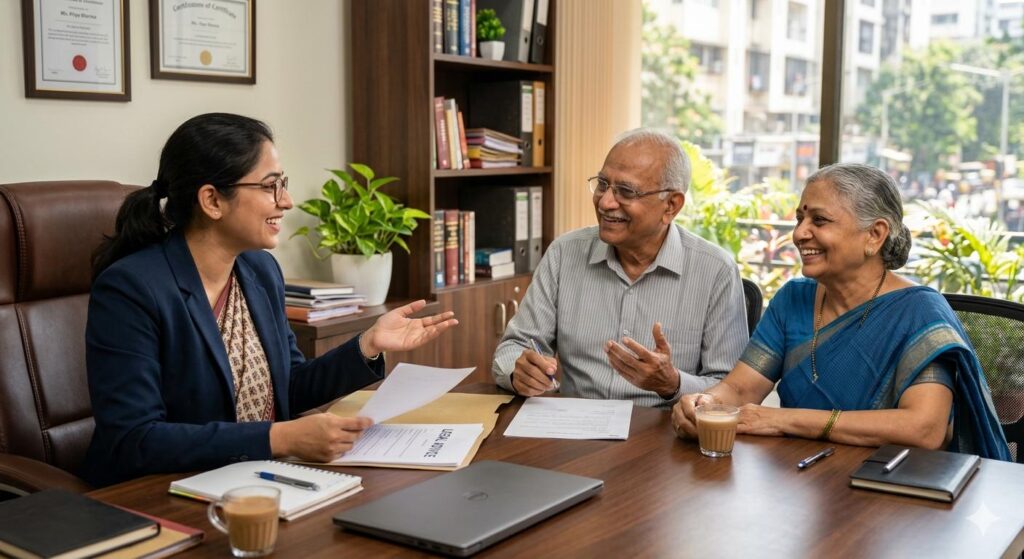
Step 2 — Send a legal notice. Ask a lawyer to send a formal legal notice to the other party, citing the breach and demanding remedy — either performance or compensation.
Step 3 — Evaluate your remedy. Discuss with your lawyer whether you should claim damages, seek specific performance, or rescind the contract. The right remedy depends on your situation.
Step 4 — Consider alternative dispute resolution. Before going to court, consider mediation or arbitration if the contract has such a clause. These options are faster and less expensive.
Step 5 — File suit if needed. If the other side doesn’t respond or refuses to settle, file a suit in the appropriate civil court or commercial court.
Frequently Asked Questions (FAQs)
Q1. Does a contract need to be in writing to be legally enforceable?
Not always. Oral contracts are generally valid under the Indian Contract Act. However, certain contracts — like those involving immovable property — must be in writing and registered. For business transactions, having a written contract is always strongly advisable as it provides clear proof of what was agreed.
Q2. What is anticipatory breach and why does it matter?
Anticipatory breach is when one party makes it clear — before the due date — that they will not be performing their obligation. The innocent party can immediately treat the contract as broken and take legal action, without waiting for the actual breach to occur. This saves valuable time and allows early action to limit losses.
Q3. Can I claim for loss of profit in a breach of contract case?
Yes, but only if the loss of profit was something that could reasonably be foreseen by both parties at the time the contract was made. This is the principle from Hadley v. Baxendale, embedded in Section 73 of the Indian Contract Act. If the profit loss was due to unusual circumstances the other party didn’t know about, the claim may be restricted.
Q4. What is the time limit to file a breach of contract case?
Under the Limitation Act, 1963, you generally have 3 years from the date of the breach to file a civil suit. Acting quickly is important — delays can weaken your case and may cause you to lose your legal right to sue altogether.
Q5. Can I claim compensation even if I didn’t lose any money?
Under Section 74 of the Indian Contract Act, you can claim a reasonable amount even without proving specific losses — but only if the contract has a liquidated damages clause and the amount is a genuine pre-estimate of harm. However, after Kailash Nath Associates v. DDA, courts require some evidence of loss or damage before awarding even pre-agreed sums.
Q6. What is specific performance and when is it granted?
Specific performance is a court order directing the breaching party to actually perform what they promised, rather than just paying compensation. It is usually granted when the subject matter of the contract is unique or rare — such as a specific piece of land or artwork — and money alone cannot adequately compensate for the loss.
Q7. Can a contract be cancelled if one party breaches it?
Yes. If the breach is serious — meaning it goes to the heart of the contract — the innocent party can rescind (cancel) the contract and claim restoration of any money or goods already provided. Minor or technical breaches usually don’t justify full cancellation, though they may still give rise to a claim for damages.
Q8. What if there was no contract, but someone still broke a promise?
Without a valid contract, you may not have a contractual remedy. However, depending on the situation, you may still have legal options — for instance, under the law of unjust enrichment, or through a claim for promissory estoppel (where someone relied on a promise to their detriment). Always consult a lawyer in such situations.
Quick Summary
A breach of contract occurs when one party fails to perform their obligations — either when performance is due (actual breach) or by declaring they won’t perform (anticipatory breach). Indian law, through Sections 73, 74, and 75 of the Indian Contract Act, gives the innocent party the right to claim damages, seek specific performance, obtain an injunction, or rescind the contract. Compensation is limited to foreseeable losses, as established through the Hadley v. Baxendale principle embedded in Section 73. Pre-agreed liquidated damages clauses are enforceable as confirmed in ONGC v. Saw Pipes (2003), but courts must still find some evidence of actual harm after Kailash Nath v. DDA (2015). Even large corporations are bound by their contracts, as seen in Indian Oil Corporation v. Amritsar Gas Service (1991). When a contract is broken, document everything, send a legal notice, and act before the 3-year limitation period runs out.
This blog is for general information only and is not legal advice. Every contract dispute is unique. Please consult a qualified lawyer for guidance specific to your situation. If you are facing a legal issue like a civil dispute, it is always better to consult experts. Visit our website 👉 https://www.lexfiedgo.in/ to get professional legal guidance.