
What Does “Legal Compliance” Mean?
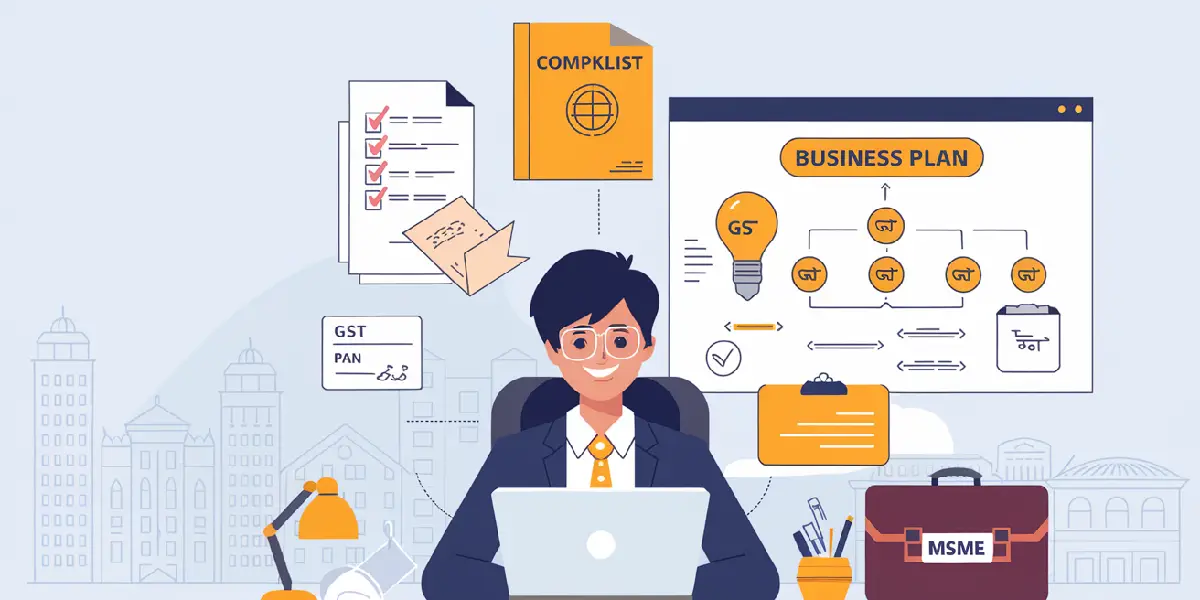
Think of legal compliance like following school rules. Just as schools have rules to keep everything organized and fair, the government has rules for businesses. Legal compliance means following all these official rules and regulations when you start and run your business in India.
Imagine you want to start a small food stall. You can’t just set up anywhere and start selling. You need permission from local authorities, food safety certificates, and tax registrations. These are legal compliances the official “permissions” you need to run your business legally.
Why is Legal Compliance Important for Your Business?
1. Avoid Legal Trouble
- Prevents government penalties and fines
- Keeps you out of court cases
- Protects you from business shutdown
2. Build Customer Trust
- Official registrations make customers feel safe
- People prefer buying from legitimate businesses
- Helps in getting business partnerships
3. Access Business Benefits
- Get business loans from banks
- Participate in government schemes
- Claim tax benefits and subsidies
4. Protect Your Investment
- Legal protection for your business name
- Safeguards your business ideas
- Ensures smooth business operations
Types of Business Structures in India
Before diving into compliances, let’s understand different ways to start a business:
1. Sole Proprietorship (Single Owner Business)
- What it is: You alone own and run the business
- Example: A local grocery store run by one person
- Best for: Small businesses, freelancers, consultants
- Advantages: Easy to start, full control, minimal paperwork
- Disadvantages: Unlimited personal liability
2. Partnership (Multiple Owners)
- What it is: Two or more people jointly own the business
- Example: Two friends starting a restaurant together
- Best for: Professional services, small to medium businesses
- Advantages: Shared responsibilities, more resources
- Disadvantages: Shared profits, potential conflicts
3. Private Limited Company (Corporate Structure)
- What it is: Business is a separate legal entity
- Example: Tech startups, manufacturing companies
- Best for: Businesses seeking investment, larger operations
- Advantages: Limited liability, easier to raise funds
- Disadvantages: More compliance requirements, complex structure
4. Limited Liability Partnership (LLP)
- What it is: Hybrid of partnership and company
- Example: Professional firms like chartered accountants
- Best for: Professional services, medium-sized businesses
- Advantages: Limited liability with partnership flexibility
- Disadvantages: More compliance than simple partnership
Essential Legal Compliances for Every Business
1. Business Registration
For Sole Proprietorship:
- Shop and Establishment License: Permission to operate from local municipal authority
- Trade License: Required for specific business activities
- MSME Registration: For small businesses (optional but beneficial)
For Companies and LLPs:
- Certificate of Incorporation: Official birth certificate of your company
- Required Documents:
- Memorandum of Association (company rules)
- Articles of Association (operational guidelines)
- Director details and shareholding pattern
2. Tax Registrations
GST Registration (Goods and Services Tax)
- When Required: If annual turnover exceeds ₹20 lakhs (₹10 lakhs for special states)
- What it covers: Tax on goods and services you sell
- Benefits: Input tax credit, legal compliance, business credibility
- Documents needed: PAN card, address proof, bank account details
Income Tax Registration
- PAN Card: Mandatory for all businesses
- TAN (Tax Deduction Account Number): If you have employees
- Purpose: Filing annual tax returns and paying income tax
3. Labor Law Compliances
If You Have Employees:
- EPF Registration (Employee Provident Fund): Retirement savings for employees
- ESI Registration (Employee State Insurance): Medical benefits for employees
- Labor License: Permission to hire workers
- Minimum Wages Compliance: Paying at least government-mandated minimum wages
4. Industry-Specific Licenses
Food Business
- FSSAI License: Food safety certificate from Food Safety and Standards Authority
- Required for: Restaurants, food manufacturing, catering services
- Types: Basic, State, and Central licenses based on business size
Manufacturing Business
- Factory License: Permission to operate manufacturing unit
- Pollution Control Certificate: Environmental clearance
- BIS Certification: Quality standards for certain products
Trading Business
- Import-Export License: For international trade
- Drug License: For pharmaceutical products
- Liquor License: For alcohol-related businesses
Step-by-Step Compliance Process
Step 1: Choose Your Business Structure
- Decide between sole proprietorship, partnership, company, or LLP
- Consider factors like investment size, liability, and growth plans
- Consult with a chartered accountant or company secretary
Step 2: Reserve Your Business Name
- Check name availability on government portals
- Ensure name doesn’t conflict with existing businesses
- Get name approval from Registrar of Companies (for companies/LLPs)
Step 3: Obtain Required Registrations
- Apply for business registration based on your structure
- Get GST registration if turnover threshold is met
- Obtain PAN and TAN for tax purposes
Step 4: Get Industry-Specific Licenses
- Identify licenses specific to your business type
- Apply through respective government departments
- Ensure all safety and quality standards are met
Step 5: Set Up Compliance Systems
- Maintain proper books of accounts
- Set up payroll systems for employees
- Create systems for regular tax filings and renewals
Costs Involved in Business Compliance
Government Fees (Approximate):
Company Registration
- Private Limited Company: Rs. 10,000-15,000
- LLP Registration: Rs. 8,000-12,000
- Partnership Registration: Rs. 2,000-5,000
License Fees
- GST Registration: Free
- FSSAI License: Rs. 2,000-10,000 (based on category)
- Shop License: Rs. 500-2,000 (varies by location)
Professional Fees
- Chartered Accountant: Rs. 15,000-50,000 annually
- Legal Consultant: Rs. 10,000-30,000 for setup
- Company Secretary: Rs. 20,000-75,000 annually (for companies)
Total Estimated Costs:
- Small Business (Sole Proprietorship): Rs. 10,000-25,000
- Medium Business (Partnership/LLP): Rs. 25,000-75,000
- Company Setup: Rs. 50,000-1,50,000
Common Compliance Mistakes to Avoid
1. Delayed Registrations
- Mistake: Starting business operations before getting proper licenses
- Consequence: Penalties, legal notices, business shutdown
- Solution: Complete all registrations before launching
2. Ignoring Tax Filings
- Mistake: Missing GST returns or income tax filings
- Consequence: Heavy penalties, interest charges
- Solution: Set up automated reminders, hire professionals
3. Inadequate Record Keeping
- Mistake: Poor maintenance of business accounts and documents
- Consequence: Problems during audits, tax assessments
- Solution: Use accounting software, maintain digital records
4. Not Updating Information
- Mistake: Failing to update address changes, director details
- Consequence: Non-compliance notices, legal complications
- Solution: Regular updates with registrar offices
Digital Tools for Easy Compliance
Government Portals:
- GST Portal: For GST registration and filing returns
- MCA Portal: For company registrations and annual filings
- FSSAI Portal: For food business licenses
- Labor Department Portals: For labor law compliances
Timeline for Business Setup
Sole Proprietorship: 7-15 days
- Shop license: 3-7 days
- GST registration: 2-7 days
- Bank account opening: 2-5 days
Partnership Firm: 15-25 days
- Partnership deed preparation: 5-7 days
- Registration with Registrar: 7-10 days
- Tax registrations: 5-7 days
Private Limited Company: 15-30 days
- Name approval: 3-5 days
- Document preparation: 5-7 days
- Incorporation: 7-15 days
- Post-incorporation compliances: 3-7 days
Ongoing Compliance Requirements
Monthly Compliances:
- GST Returns: By 20th of following month
- TDS Returns: By 7th of following month
- EPF/ESI Returns: By 15th of following month
Annual Compliances:
- Income Tax Returns: By July 31st
- Annual GST Return: By December 31st
- ROC Filings: For companies and LLPs (various due dates)
Getting Professional Help
When to Hire Professionals:
Chartered Accountant (CA)
- For: Tax planning, GST compliance, audit requirements
- Cost: Rs.15,000-50,000 annually
- Benefits: Expert tax advice, compliance management
Company Secretary (CS)
- For: Corporate law compliance, board meetings, ROC filings
- Cost: Rs. 20,000-75,000 annually
- Benefits: Legal compliance, corporate governance
Legal Consultant
- For: Contract drafting, legal compliance, dispute resolution
- Cost: Rs. 500-2,000 per hour
- Benefits: Legal protection, contract expertise
Tips for Easy Compliance Management
1. Start Early
- Begin compliance processes before launching business
- Don’t wait until the last minute for registrations
2. Use Technology
- Adopt digital tools for accounting and compliance
- Set up automated reminders for due dates
3. Stay Updated
- Follow government notifications about law changes
- Subscribe to business compliance newsletters
4. Maintain Good Records
- Keep all documents organized and easily accessible
- Use cloud storage for backup and easy retrieval
5. Plan for Growth
- Choose business structure considering future expansion
- Understand compliance requirements for scaling up
Red Flags to Watch Out For
Warning Signs of Non-Compliance:
- Notices from government departments
- Penalties and interest charges accumulating
- Difficulty in getting business loans or partnerships
- Problems during business audits
Immediate Actions Required:
- Consult professionals immediately
- File pending returns and applications
- Pay outstanding dues and penalties
- Set up proper compliance systems
Conclusion
Starting a business in India involves various legal compliances, but don’t let this scare you away from your entrepreneurial dreams. Think of these compliances as building a strong foundation for your business house. Just like you need proper foundation before building a house, you need proper legal structure before building a successful business.
The key is to start with the basics, get professional help when needed, and gradually build your compliance systems as your business grows. Remember, every successful business in India has gone through these same steps.
Most importantly, compliance isn’t just about avoiding penalties – it’s about building a trustworthy, sustainable business that customers, investors, and partners can rely on. Take it step by step, stay organized, and don’t hesitate to seek help from professionals when needed.
Your business journey starts with understanding and following these rules. Once you have the legal foundation in place, you can focus on what you do best growing your business and serving your customers.
Disclaimer: This blog provides general information for educational purposes only. For specific legal advice regarding your situation, please write to us @ help@lexfiedgo.in for a consultation with a qualified legal professional for specific legal and tax advice related to your business.