
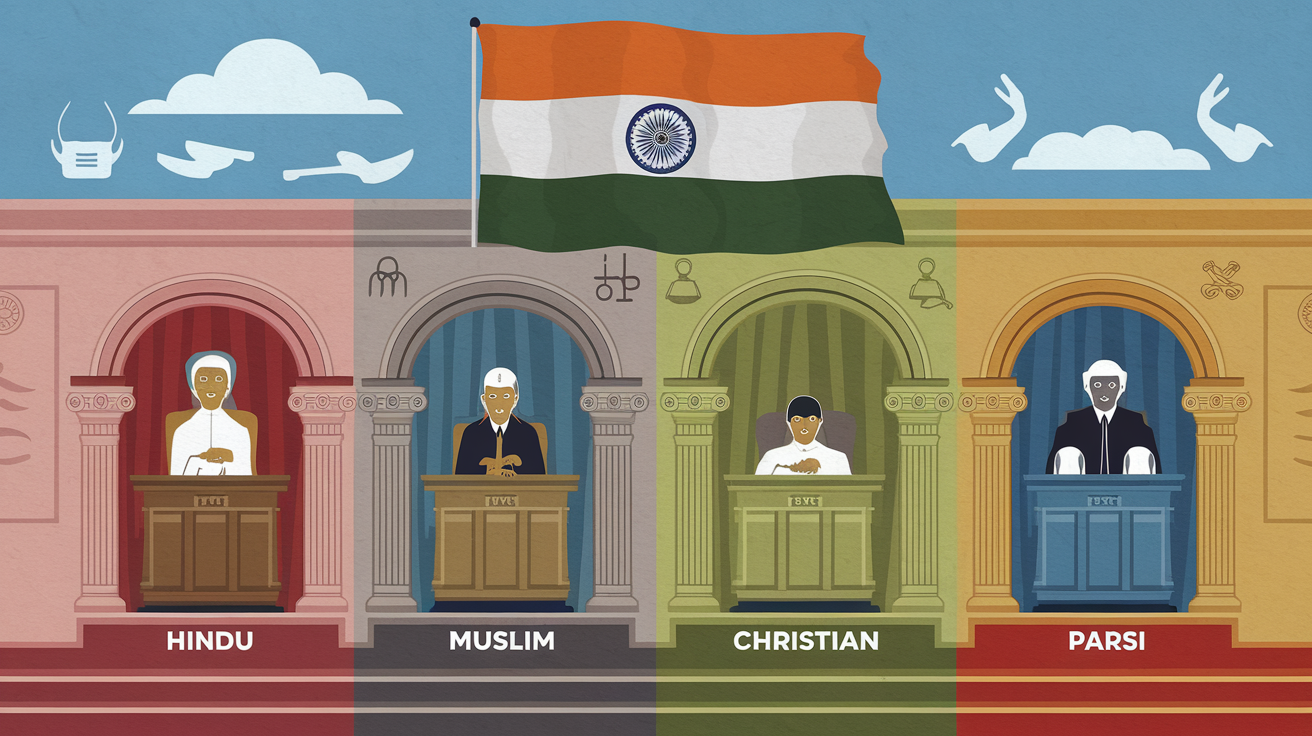
India’s legal framework for divorce reflects its rich cultural and religious diversity. Unlike many countries with a uniform civil code, India maintains distinct personal laws for different religious communities. These laws govern marriage, divorce, succession, and other family matters based on an individual’s religious affiliation.
Understanding these differences is crucial if you’re contemplating divorce or supporting someone who is. This comprehensive guide breaks down divorce proceedings under various personal laws in India, outlining the grounds for divorce, procedures, timelines, and important considerations for each.
Hindu Divorce Laws (Hindu Marriage Act, 1955)
The Hindu Marriage Act, 1955 governs divorce proceedings for Hindus, Buddhists, Jains, and Sikhs.
Grounds of Divorce Under Hindu Law
Divorce can be sought on the following grounds:
- Adultery: When the spouse has voluntary sexual intercourse outside of marriage
- Cruelty: Physical or mental cruelty that causes reasonable apprehension of harm
- Desertion: Abandonment without reasonable cause for at least two continuous years
- Conversion: If the spouse converts to another religion
- Mental illness: Unsoundness of mind or continuous/intermittent mental disorder
- Communicable disease: Suffering from a virulent and incurable form of leprosy, venereal disease, etc.
- Renunciation: Renouncing the world by entering religious orders
- Presumption of death: No information about the spouse being alive for at least seven years
Mutual Consent Divorce under Hindu Law
For a mutual consent divorce:
- Spouses must have lived separately for at least one year
- They must mutually agree that the marriage cannot be saved
- The process involves filing a joint petition, followed by two court appearances
- There is a mandatory 6-month cooling-off period between the first and second motion
- The court may waive the cooling period in exceptional circumstances
Timeline for Hindu Divorce Proceedings
- Contested divorce: 18-24 months on average (may extend to several years)
- Mutual consent divorce: 6-8 months on average
Muslim Divorce Laws (Muslim Personal Law)
Muslim divorces are governed by the Muslim Personal Law (Shariat) Application Act, 1937, and the Dissolution of Muslim Marriages Act, 1939.
Types of Divorce under Muslim Law
- Talaq (by husband):
- Talaq-ul-Sunnat: Revocable divorce pronounced over three months
- Talaq-e-Biddat: Triple talaq (now illegal under the Muslim Women (Protection of Rights on Marriage) Act, 2019)
- Khula (by wife):
- Divorce initiated by the wife, usually involving returning the mehr (dower)
- Requires husband’s consent
- Mubarat:
- Mutual consent divorce where both parties desire separation
- Judicial Divorce (under Dissolution of Muslim Marriages Act): A Muslim woman can seek divorce on grounds including:
- Husband’s whereabouts unknown for four years
- Failure to provide maintenance for two years
- Imprisonment of husband for seven years or more
- Failure to perform marital obligations for three years
- Impotence of husband
- Insanity, leprosy, or virulent venereal disease
- Cruelty or physical abuse
Timeline for Muslim Divorce Proceedings
- Talaq: Effective immediately after the iddat period (approximately three months)
- Khula/Mubarat: Varies based on negotiations, typically 3-6 months
- Judicial divorce: 12-18 months on average
Christian Divorce Laws (Indian Divorce Act, 1869)
The Indian Divorce Act governs divorce proceedings for Christians in India.
Grounds for Divorce under Christian Law
- Adultery: Voluntary sexual intercourse outside of marriage
- Conversion: If the spouse converts to another religion and remains non-Christian for a particular period
- Unsoundness of mind: Mental disorder for at least two years
- Communicable disease: Suffering from a virulent and incurable form of leprosy, venereal disease, etc.
- Non-resumption of cohabitation: Failure to resume cohabitation after a decree of separation for at least two years
- Desertion: Abandonment without reasonable cause for at least two continuous years
- Cruelty: Physical or mental cruelty that causes reasonable apprehension of harm
- Presumption of death: No information about the spouse being alive for at least seven years
Mutual Consent Divorce under Christian Law
For a mutual consent divorce:
- Spouses must have lived separately for at least two years
- They must jointly petition the court
- There is a mandatory 6-month cooling-off period
Timeline for Christian Divorce Proceedings
- Contested divorce: 18-24 months on average
- Mutual consent divorce: 8-12 months on average
Parsi Divorce Laws (Parsi Marriage and Divorce Act, 1936)
The Parsi Marriage and Divorce Act govern divorce proceedings for the Parsi community.
Grounds for Divorce Under Parsi Law
- Adultery: Voluntary sexual intercourse outside of marriage
- Cruelty: Physical or mental cruelty that causes reasonable apprehension of harm
- Desertion: Abandonment without reasonable cause for at least two years
- Imprisonment: for seven years or more
- Mental Disability: Unsoundness of mind for a period of two years
- Marriage not consummated within one year due to willful refusal by the spouse
- Conversion: Cessation of being a Parsi by conversion to another religion
Mutual Consent Divorce under Parsi Law
Parsi couples can seek divorce by mutual consent if they have been separated for at least one year and both agree that the marriage cannot be sustained.
Timeline for Parsi Divorce Proceedings
- Contested divorce: 12-24 months on average
- Mutual consent divorce: 6-8 months on average
Special Marriage Act Divorces (For Inter-Religious Marriages)
The Special Marriage Act, 1954, governs civil marriages and divorces irrespective of religion.
Grounds for Divorce under Special Marriage Act
The grounds are similar to Hindu Marriage Act and include:
- Adultery
- Desertion for at least two years
- Imprisonment for seven years or more
- Cruelty
- Unsoundness of mind
- Communicable disease
- Presumption of death
- No resumption of cohabitation after a decree of separation
Mutual Consent Divorce under Special Marriage Act
Requirements include:
- Living separately for at least one year
- Mutual agreement that the marriage cannot be sustained
- Filing a joint petition
- Mandatory 6-month cooling-off period
Timeline for Special Marriage Act Divorce Proceedings
- Contested divorce: 18-24 months on average
- Mutual consent divorce: 6-8 months on average
Key Divorce Procedures Common across Personal Laws
Despite differences, certain procedural aspects remain common:
Filing the Petition
- Jurisdiction: Petition must be filed in a Family Court or District Court where:
- The marriage was solemnized
- The couple last resided together
- The wife currently resides (if she files the petition)
- The respondent resides (in certain cases)
- Documentation required:
- Marriage certificate
- Address proof of both parties
- Income proofs
- Photographs
- Any evidence supporting grounds for divorce
Mediation and Counseling
Most courts mandate mediation and counseling before proceeding with divorce:
- Mediation aims at reconciliation or, if not possible, amicable settlement
- Professional counselors appointed by the court offer guidance
- Successful mediation can lead to mutual consent divorce, even in contested cases
Interim Maintenance and Child Custody
During proceedings, the court may pass interim orders regarding:
- Maintenance: Financial support for spouse (typically the wife) and children
- Child custody: Temporary custody arrangements considering the child’s best interests
- Residence: Rights to the matrimonial home during proceedings
Final Settlement
The final decree addresses:
- Permanent alimony: Regular payments or one-time settlement
- Child custody: Primary custody, visitation rights, and shared responsibilities
- Property division: Distribution of matrimonial assets
- Maintenance: Ongoing financial support if needed
Recent Legal Developments
Recent judicial and legislative developments have impacted divorce proceedings:
- Waiver of cooling period: Supreme Court in Amardeep Singh vs. Harveen Kaur (2017) allowed courts to waive the 6-month cooling period in mutual consent divorces under exceptional circumstances
- Irretrievable breakdown: Courts increasingly recognize “irretrievable breakdown of marriage” as grounds for divorce
- Live-in relationships: Recognition of rights in long-term live-in relationships similar to marriage
- Triple Talaq ban: The Muslim Women (Protection of Rights on Marriage) Act, 2019, criminalized instant triple talaq
- No-fault divorce: Growing judicial recognition of no-fault divorce principles
Common Challenges in Indian Divorce Proceedings
- Delays: Court backlogs often lead to prolonged proceedings
- Emotional distress: Adversarial procedures can increase emotional trauma
- Financial strain: Legal fees and maintenance obligations create financial pressure
- Social stigma: Divorce still carries significant social stigma in many communities
- Child-related issues: Custody battles often become the most contentious part of proceedings
Conclusion
Divorce in India requires understanding the specific personal law applicable to your marriage. While the grounds and procedures vary across religious communities, the underlying principles of fairness, financial security, and child welfare remain consistent.
If you’re considering divorce, consult an experienced family law attorney familiar with your personal law to understand your rights, responsibilities, and the most effective path forward. Remember that divorce, while difficult, can sometimes be the healthiest solution for all involved, especially when navigated with proper legal guidance and emotional support.
Disclaimer: This blog provides general information for educational purposes only. For specific legal advice regarding your situation, please write to us @ help@lexfiedgo.in for a consultation with a qualified legal professional.