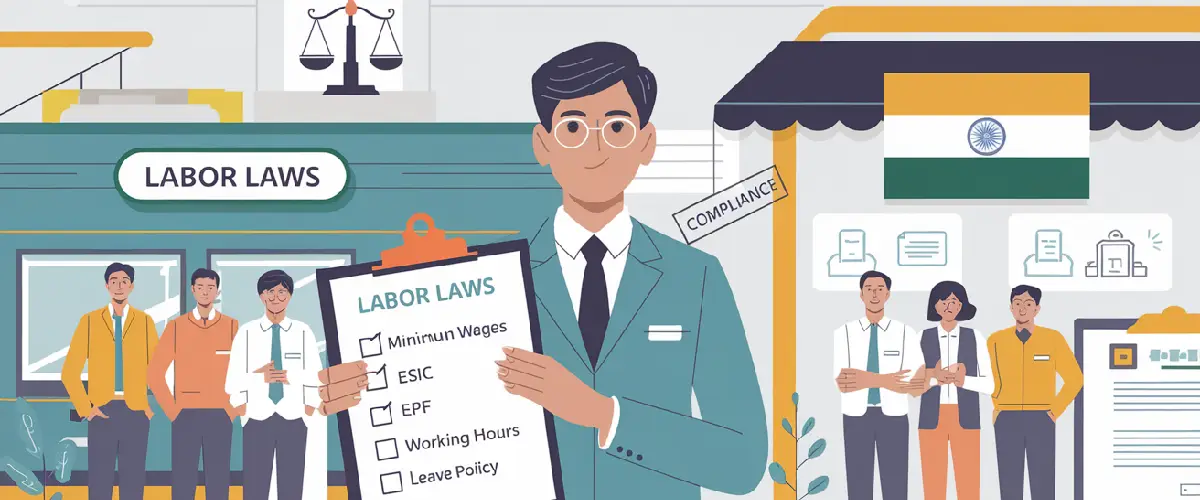
What Are Labor Laws?
Labor laws are like rules in a game that make sure both players (employers and employees) play fairly. Just as cricket has rules to ensure fair play between teams, labor laws ensure fair treatment between business owners and their workers.
Imagine you’re running a small restaurant and you hire someone to help you. Labor laws tell you how many hours they can work, how much you should pay them, what safety measures you need, and what benefits they deserve. These laws protect workers from unfair treatment while also giving business owners clear guidelines to follow.
Think of labor laws as a friendship contract between you and your employees – it keeps the relationship healthy and prevents misunderstandings.
Why Should Small Business Owners Care About Labor Laws?
1. Avoid Legal Trouble
- Prevents costly lawsuits and legal disputes
- Avoids government penalties and fines
- Keeps your business running smoothly without interruptions
2. Build a Good Reputation
- Attracts better employees who want to work for fair employers
- Creates positive word-of-mouth about your business
- Builds trust with customers who prefer ethical businesses
3. Improve Business Performance
- Happy employees work harder and stay longer
- Reduces staff turnover and training costs
- Creates a positive work environment that boosts productivity
4. Access Government Benefits
- Qualify for government schemes and subsidies
- Get easier access to business loans and licenses
- Participate in government tenders and contracts
Key Labor Laws Every Small Business Owner Must Know
1. The Code on Wages, 2019
This law is like a price tag for human work – it ensures everyone gets paid fairly.
Minimum Wages
- What it means: The lowest amount you must pay any worker
- Current rates: Varies by state, typically Rs. 150-400 per day for unskilled workers
- Example: If your state’s minimum wage is Rs. 200/day, you cannot pay less than Rs. 6,000/month for full-time work
Payment Rules
- Salary Payment: Must be paid within 7 days of the month ending
- Daily Wage Payment: Must be paid before the end of the working day
- Overtime Pay: Double the normal rate for extra hours
- No Deductions: Cannot cut salary without valid reasons
2. The Code on Social Security, 2020
This is like an insurance policy that protects your employees when they need help.
Employee Provident Fund (EPF)
- When Required: If you have 20+ employees or monthly wages exceed Rs.15,000
- Employee Contribution: 12% of basic salary
- Employer Contribution: 12% of basic salary
- Purpose: Retirement savings for employees
Employee State Insurance (ESI)
- When Required: If you have 10+ employees (20+ in some states)
- Employee Contribution: 0.75% of wages
- Employer Contribution: 3.25% of wages
- Benefits: Medical care and cash benefits during sickness
3. The Code on Industrial Relations, 2020
This law is like rules for maintaining peace in your workplace family.
Trade Unions
- Worker Rights: Employees can form unions if they want
- Your Role: Cannot prevent or discourage union formation
- Negotiation: Must discuss workplace issues with union representatives
Dispute Resolution
- Internal Committees: Set up systems to resolve workplace conflicts
- Grievance Handling: Have a process for employees to raise concerns
- Fair Treatment: Cannot discriminate or treat employees unfairly
4. The Code on Occupational Safety, Health and Working Conditions, 2020
This ensures your workplace is as safe as your home.
Safety Requirements
- Safe Environment: Provide clean, well-lit, and ventilated workspace
- Safety Equipment: Provide necessary protective gear for dangerous work
- First Aid: Have basic medical supplies and trained personnel
- Emergency Exits: Clear pathways for quick evacuation
Working Hours
- Daily Limit: Maximum 8 hours per day
- Weekly Limit: Maximum 48 hours per week
- Rest Breaks: At least 30 minutes break after 5 hours of work
- Weekly Rest: At least one full day off per week
Understanding Different Types of Employment
1. Full-Time Employees
- Definition: Work 8 hours a day, 6 days a week regularly
- Benefits: All labor law protections apply
- Employer Obligations: Full salary, benefits, job security
- Example: A cashier working in your shop every day
2. Part-Time Employees
- Definition: Work less than full-time hours regularly
- Benefits: Proportional benefits based on hours worked
- Employer Obligations: Fair wages, basic safety measures
- Example: Someone working 4 hours daily in your restaurant
3. Contract/Temporary Workers
- Definition: Hired for specific projects or time periods
- Benefits: Basic wage and safety protections
- Employer Obligations: Clear contract terms, fair payment
- Example: Extra staff hired during festival season
4. Interns and Apprentices
- Definition: Learning while working, usually students
- Benefits: Minimum wage, learning opportunities, safety
- Employer Obligations: Proper training, fair treatment
- Example: College students working part-time to gain experience
Step-by-Step Guide to Labor Law Compliance
Step 1: Determine Which Laws Apply to You
Based on Number of Employees:
- 1-9 Employees: Basic wage and safety laws
- 10-19 Employees: Add ESI registration
- 20+ Employees: Add EPF registration and more compliance requirements
Based on Business Type:
- Shops and Offices: Shop and Establishment Act
- Manufacturing: Factory Act provisions
- Restaurants: Food safety + labor laws
- Construction: Specific safety and wage requirements
Step 2: Register with Appropriate Authorities
Essential Registrations:
- Shop and Establishment License: From local municipal authority
- EPF Registration: If applicable (20+ employees)
- ESI Registration: If applicable (10+ employees)
- Contract Labor License: If using contract workers
Step 3: Set Up Employment Policies
Written Employment Policies:
- Job Descriptions: Clear roles and responsibilities
- Salary Structure: Basic pay, allowances, deductions
- Working Hours: Start time, end time, break times
- Leave Policy: Sick leave, casual leave, annual leave
- Disciplinary Policy: Rules and consequences for misconduct
Step 4: Maintain Required Records
Mandatory Record-Keeping:
- Attendance Records: Daily attendance of all employees
- Wage Records: Salary payments and deductions
- Leave Records: Sick leave, casual leave taken
- Safety Training Records: Training provided to employees
Common Labor Law Violations and How to Avoid Them
1. Paying Below Minimum Wage
The Problem:
- Paying Rs. 4,000/month when minimum wage requires ₹6,000
- Not paying overtime for extra hours worked
- Making illegal deductions from salary
How to Avoid:
- Check your state’s current minimum wage rates
- Calculate overtime pay at double the normal rate
- Only make legal deductions (taxes, EPF, ESI)
- Keep detailed payment records
2. Exceeding Working Hours
The Problem:
- Making employees work 10-12 hours daily regularly
- Not providing weekly rest days
- Forcing work during lunch breaks
How to Avoid:
- Limit work to 8 hours per day, 48 hours per week
- Provide at least one full day off per week
- Ensure 30-minute break after 5 hours of work
- Hire additional staff instead of overworking existing employees
3. Poor Workplace Safety
The Problem:
- No safety equipment in dangerous work environments
- Poor lighting and ventilation
- No first aid facilities
How to Avoid:
- Conduct regular safety inspections
- Provide necessary protective equipment
- Maintain clean and well-lit workplace
- Train employees on safety procedures
4. Unfair Treatment and Discrimination
The Problem:
- Paying men and women differently for same work
- Discriminating based on religion, caste, or region
- Harassing or mistreating employees
How to Avoid:
- Implement equal pay for equal work policy
- Create anti-discrimination and harassment policies
- Treat all employees with respect and fairness
- Have a grievance handling mechanism
Costs of Labor Law Compliance for Small Businesses
Registration and License Fees:
- Shop and Establishment License: Rs. 500-2,000 annually
- EPF Registration: Rs. 500-1,000 (one-time)
- ESI Registration: Free
- Professional Fees: Rs. 5,000-15,000 annually
Ongoing Compliance Costs:
- EPF Contribution: 12% of employee’s basic salary
- ESI Contribution: 3.25% of employee’s wages
- Bonus Payment: 8.33% of salary annually (if applicable)
- Gratuity: 4.81% of salary (after 5 years of service)
Example Cost Calculation:
For an employee earning Rs. 20,000/month:
- EPF Employer Share: Rs. 2,400/month
- ESI Employer Share: Rs. 650/month
- Total Monthly Cost: Rs. 23,050 (Rs. 20,000 + Rs. 3,050 compliance costs)
Benefits of Following Labor Laws
1. Better Employee Relations
- Higher employee satisfaction and loyalty
- Reduced staff turnover and recruitment costs
- Improved workplace productivity and efficiency
- Positive company culture and team spirit
2. Business Growth Opportunities
- Easier access to government contracts and tenders
- Better creditworthiness for bank loans
- Positive reputation attracts better customers
- Eligibility for various government schemes
3. Risk Mitigation
- Protection from labor disputes and strikes
- Reduced legal costs and penalties
- Lower chances of workplace accidents
- Protection of business reputation
Creating Employee-Friendly Policies
1. Fair Leave Policy
Minimum Legal Requirements:
- Earned Leave: 1 day per month (12 days annually)
- Sick Leave: As per company policy (typically 7-12 days)
- Casual Leave: As per company policy (typically 7-10 days)
Employee-Friendly Additions:
- Maternity Leave: 26 weeks for women employees
- Paternity Leave: 15 days for new fathers
- Festival Leave: Additional days for major festivals
- Emergency Leave: Compassionate leave for family emergencies
2. Health and Safety Measures
Basic Requirements:
- Clean drinking water facilities
- Proper toilet and washing facilities
- Adequate lighting and ventilation
- Fire safety equipment and emergency exits
Additional Benefits:
- Annual health check-ups for employees
- Group health insurance coverage
- Mental health and stress management programs
- Ergonomic workplace design
3. Professional Development
Legal Requirements:
- Basic job training and safety orientation
- Skill development for apprentices
Value-Added Programs:
- Regular skill development workshops
- Educational reimbursement programs
- Career advancement opportunities
- Recognition and reward programs
Handling Labor Disputes
1. Prevention is Better than Cure
- Clear Communication: Regular team meetings and feedback
- Open Door Policy: Employees can approach management easily
- Fair Treatment: Consistent application of rules for everyone
- Regular Reviews: Periodic salary and performance reviews
2. Internal Dispute Resolution
- Grievance Committee: Small team to handle employee complaints
- Mediation Process: Try to resolve issues through discussion
- Documentation: Keep records of all complaints and resolutions
- Fair Investigation: Thorough and unbiased examination of issues
3. External Dispute Resolution
- Labor Commissioner: Government officer who mediates disputes
- Industrial Tribunal: Court specifically for labor disputes
- Conciliation Officer: Government appointed mediator
- Legal Counsel: Hire labor law specialist when needed
Special Considerations for Different Business Types
1. Retail Shops
- Extended Hours: Special permits for shops open beyond normal hours
- Female Employees: Additional safety measures for women working evening shifts
- Casual Workers: Proper documentation for temporary festival season staff
2. Restaurants and Food Services
- Health Safety: Additional hygiene and safety requirements
- Shift Work: Proper rotation and rest periods for different shifts
- Tips and Service Charges: Proper distribution among staff
3. Manufacturing Units
- Industrial Safety: Stricter safety norms and regular inspections
- Pollution Control: Environmental compliance along with labor laws
- Skill Development: Training programs for technical workers
4. Service Businesses
- Professional Development: Continuous learning opportunities
- Client Interaction: Training for customer-facing employees
- Data Security: Protecting employee and customer information
Red Flags: Signs Your Business May Have Labor Law Issues
Warning Signs:
- High Employee Turnover: People leaving frequently
- Frequent Complaints: Employees constantly raising issues
- Government Notices: Receiving letters from labor departments
- Union Formation: Workers organizing themselves for protection
- Accident Reports: Repeated workplace injuries or safety issues
Immediate Actions:
- Conduct Internal Audit: Review all labor practices
- Consult Legal Expert: Get professional advice on compliance
- Employee Feedback: Anonymous surveys to understand issues
- Policy Review: Update and improve existing policies
- Training Programs: Educate management on proper practices
Conclusion
Navigating labor laws might seem overwhelming at first, but think of it as learning to drive. Once you understand the basic rules and practice following them, it becomes second nature. The key is to start with the basics and gradually build your knowledge and systems.
Remember, labor laws are not designed to make your business difficult – they’re meant to create a fair and safe environment where both you and your employees can succeed. When employees feel valued and protected, they work better, stay longer, and help your business grow.
Start small, be consistent, and don’t hesitate to seek professional help when needed. Many successful small businesses in India have navigated these same laws and built thriving enterprises while treating their employees fairly.
Your business success depends not just on customers and profits, but also on the people who work with you every day. By following labor laws, you’re not just avoiding legal trouble – you’re building a foundation for long-term success and creating a workplace where people want to work.
The investment you make in proper labor law compliance today will pay dividends in the form of loyal employees, smooth operations, and sustainable business growth. Take it one step at a time, stay informed about changes in laws, and always remember that treating people fairly is not just good law – it’s good business.
Disclaimer: This blog provides general information for educational purposes only. For specific legal advice regarding your situation, please write to us @ help@lexfiedgo.in for a consultation with a qualified legal professional for specific advice related to your business situation and location.